StoryBrand SEO
Does StoryBrand Hurt SEO? What a Certified Guide Sees on Real Sites
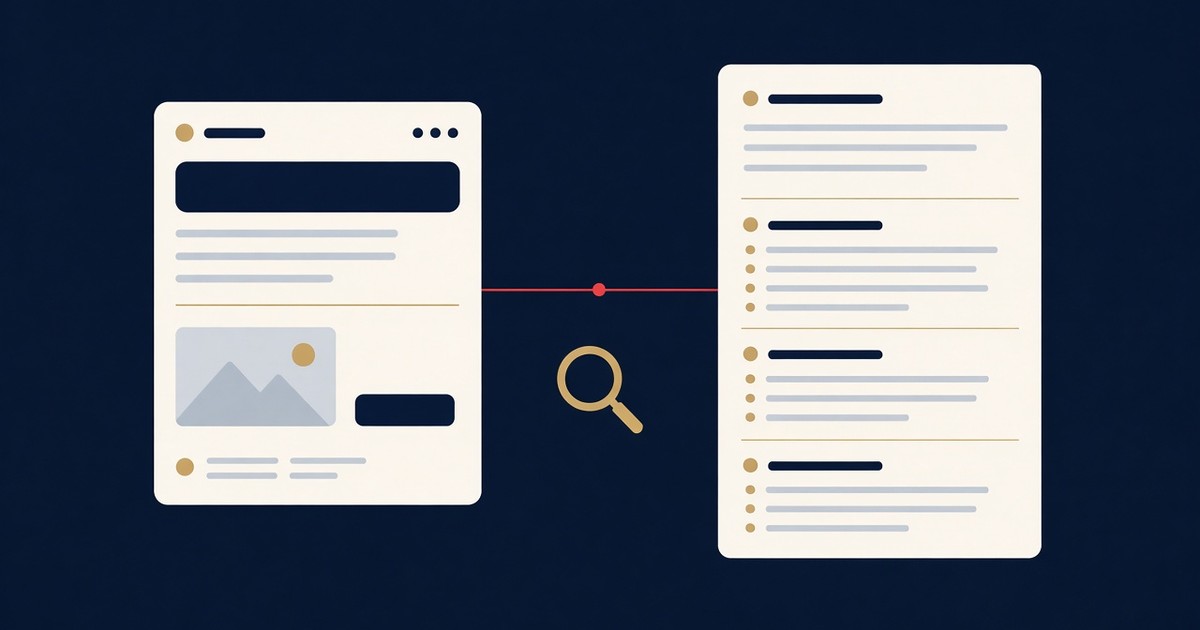
StoryBrand does not have to hurt SEO. You may use fewer words, but the words are better and more focused, with depth moved off the homepage.

TL;DR
- The myth says StoryBrand hurts SEO because Guides write fewer words and Google measures text.
- The truth: you may use fewer words, but the words are better and more focused on the customer who needs to buy.
- Protect the homepage from cognitive load. Put depth on about pages, service pages, and 2,500-plus-word blog posts.
- Balance clear messaging with keyword presence: small keyword line, big hero as H2, page FAQs, read-more sections, newspaper-style layout.
- One anonymized client example: a StoryBrand Certified Guide who works as a fractional CMO for smaller independent nonprofits refined keywords, ran an AI readiness process, then completed the first two 30-day items from her report (a homepage FAQ block with schema, plus a pillar page for her named signature method). Within about four days an ideal client found her on ChatGPT. One experience, not a promise.
On this page
- The myth: StoryBrand hurts SEO
- What Guides are protecting on the homepage
- Where the depth goes instead
- A keyword technique that keeps the message human
- They Ask, You Answer meets AI search
- What this looked like on a real site
- What to do on your own site
- FAQs
- About the author
You clarified your message. You cut the fluff. Your homepage finally says what you do in plain English.
Then someone asks the question that makes owners nervous:
Does StoryBrand hurt SEO?
I have heard that question since I became a StoryBrand Certified Guide in 2020. The worry is simple. StoryBrand teaches you to say less. Old-school SEO taught people to put more words on the page. Google measures text. So if you write less, do you lose?
Here is the myth-buster version I give owners and other Guides.
StoryBrand does not have to hurt SEO. The myth assumes that more words always win. The truth is you may use fewer words, but the words are better and more focused. You protect the homepage so a busy buyer is not overloaded. Then you put the depth Google and AI both reward on about pages, service pages, and long blog posts built around the questions your customers already ask.
That is what I see on real sites. Not theory. Workarounds that keep the message clear and still give search engines something solid to work with.
Want a second set of eyes on whether your StoryBrand site is findable? Book a discovery call and we will look at your homepage, keywords, and AI readiness together: Book a discovery call
The myth: StoryBrand hurts SEO
When I first started, people would say StoryBrand is not good for SEO, because you are writing less text, and again, Google measures text. And so therefore, if you have less text, that means you have less of a presence with Google and SEO.
There is a grain of history in that fear. Early SEO leaned hard on word count, alt text, and keyword density. Sites stuffed location keywords into every sentence. The copy ranked. The buyer bounced.
As Donald Miller puts it, the problem is cognitive load. When someone has to dig in and try to figure out what your message is saying, if they do not instantly get it, you are causing them to work too hard. The moment they need to dig in, they click away. Their brain basically yells next. They move on to the next website. Often that shows up as a bounce.
So yes: if your only SEO strategy is "more words on the homepage," StoryBrand will feel like it hurts. You are using fewer words than an old-school keyword page. That is the point. Guides are constantly working to say less. We want more powerful words. We do not want to bog down a customer on the homepage.
You might win in the SEO world and lose in the business world. Traffic that never becomes a conversation is not a win.
What I was trying to say then, and what I still say now, is there are workarounds. We accommodate the fact that there is less text on the hero. We also make sure the text that remains is zeroed in on your ideal customer and how you help them. Fewer words. Better words. More focused words.
"You may have less words, but the words are better and the words are more focused."
— Tim Yates, StoryBrand Certified Guide
What Guides are protecting on the homepage
I am very protective of the homepage.
Within the first three to five seconds, a first-time visitor needs to know who you are, what you offer, how that service or product makes their life better, and how they can get it. Everybody arrives carrying a problem. The first question in their head is simple: can this business help me?
If they do not believe that within those first seconds, they leave for a competitor with a clearer message.
That is why StoryBrand pages look short. Short is not empty. Short is focused. The homepage should speak directly to the customer's problem and explain how you help, with as little wording as possible, pinpointed to the problem they are trying to solve.
As soon as they believe you can help them, they are willing to dig in and learn more. That is the order. Belief first. Depth second.
One pattern I use a lot on StoryBrand sites is a read-more control that reveals longer copy when someone wants it. Google still gets the words on the page. The reader is not forced to wade through a wall of text before they decide you are relevant.
Think of the homepage like a newspaper. Headlines tell the story from top to bottom. Then subtext. Then detailed text and a clear call to action. People glance the whole page the way they glance USA Today. If it matches what they came for, they dig into the article. Frame the site the same way.
In my experience, once someone believes you can help, they often dig into the about page next. That page can carry more of your story, credentials, and proof without making the hero panel do all the work.
Where the depth goes instead
If the homepage stays lean, where does the SEO depth live?
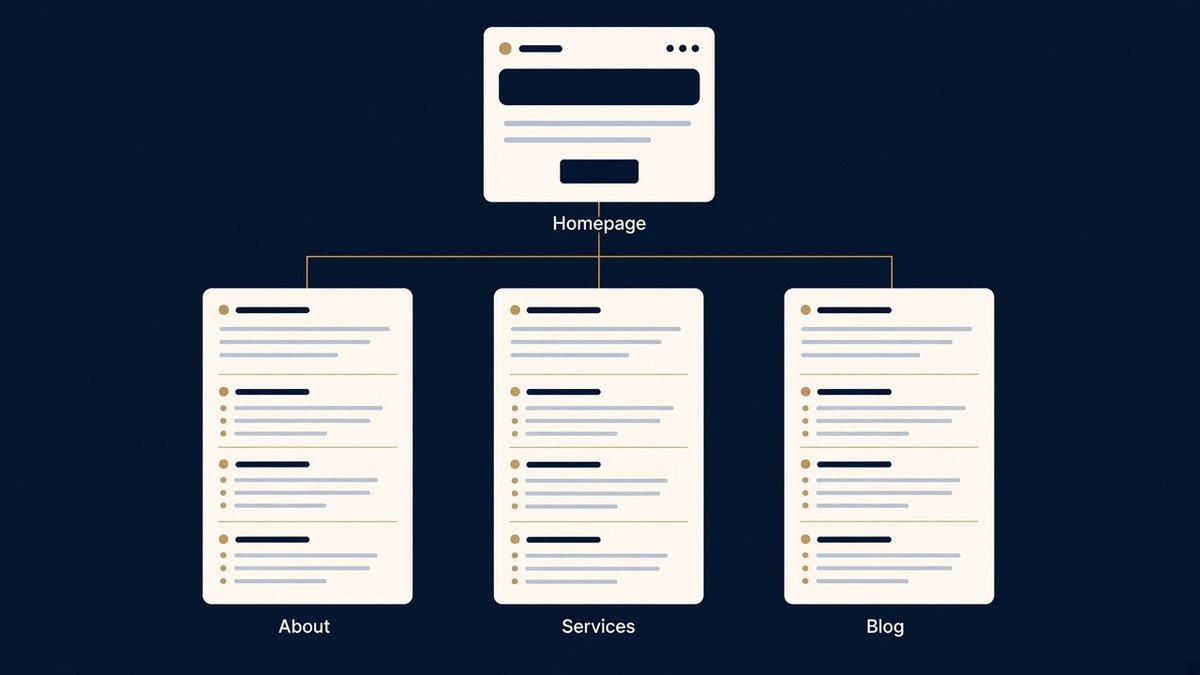
On the about page. On service pages. And especially on blog posts.
People expect a lot of copy in a blog post. That is where you can write the 2,500-word or longer pieces that give traditional SEO the substance it looks for. Even then, the post should not be keyword stuffing. Pair it with They Ask, You Answer thinking. Address the questions customers actually have. Follow an E-E-A-T pattern: experience, expertise, authority, and trust.
In plain terms: you say you do this, but prove it. Show real results. Show how you have helped people like the reader. Answer the questions sitting on that page's topic.
Today it is common to put an FAQ block at the bottom of a page with anywhere from five to eight pinpoint questions about that page and the keyword you are trying to attract. That is depth without dumping a novel into the hero.
Great marketing, great SEO, and AI search are rewarded by clarity. The better you understand who the client is, the problem they have, what success looks like, and what the first step is, the easier it is to write copy that serves humans and machines.
If you already have a clear StoryBrand message and still wonder why the right people are not finding you, start with a discovery call. We can map homepage clarity against keyword and AI readiness without turning your site into a word farm: Book a discovery call.
A keyword technique that keeps the message human
On a typical site, the biggest text in the hero is the H1, and people try to cram the keyword into that sentence. It often feels salesy and forced, especially with a location keyword jammed into a line that should sound like a human talking.
Here is what I do differently.
I designate the target keyword and put it as small text near the top. That sets the precedent: this is what this page is about. Then I make the large hero line an H2. Because the keyword space is already claimed, the big line is free to say what the customer needs to hear. Below that, an H3 covers how you make their life better.
I still make sure the keyword shows up the right number of times for the content. I often do that with small headings that state the keyword cleanly, instead of twisting every paragraph. That frees you to talk about the topic in natural language.
Over the years I have had people call after reading a site built this way and say, in effect, I got to the second section and thought, yes, that is exactly how I am feeling. That is the goal. The person on the other side of the laptop came with a problem. Your job is to sound like you understand it.
They Ask, You Answer meets AI search
A few years ago Marcus Sheridan wrote They Ask, You Answer. That is still where I start when people ask how to balance less homepage copy with search.
In essence: every question a client would have about your service or product needs to live on your site somewhere, so they can find the exact answers they are searching for.
With AI search, that idea merges with traditional SEO. Clear message still comes first. Speak to the problem. Show empathy. Show you have done this before. Then answer the questions. Add schema so bots can understand what the content is. Keep details complete, because incomplete answers leave gaps AI may fill skeptically.
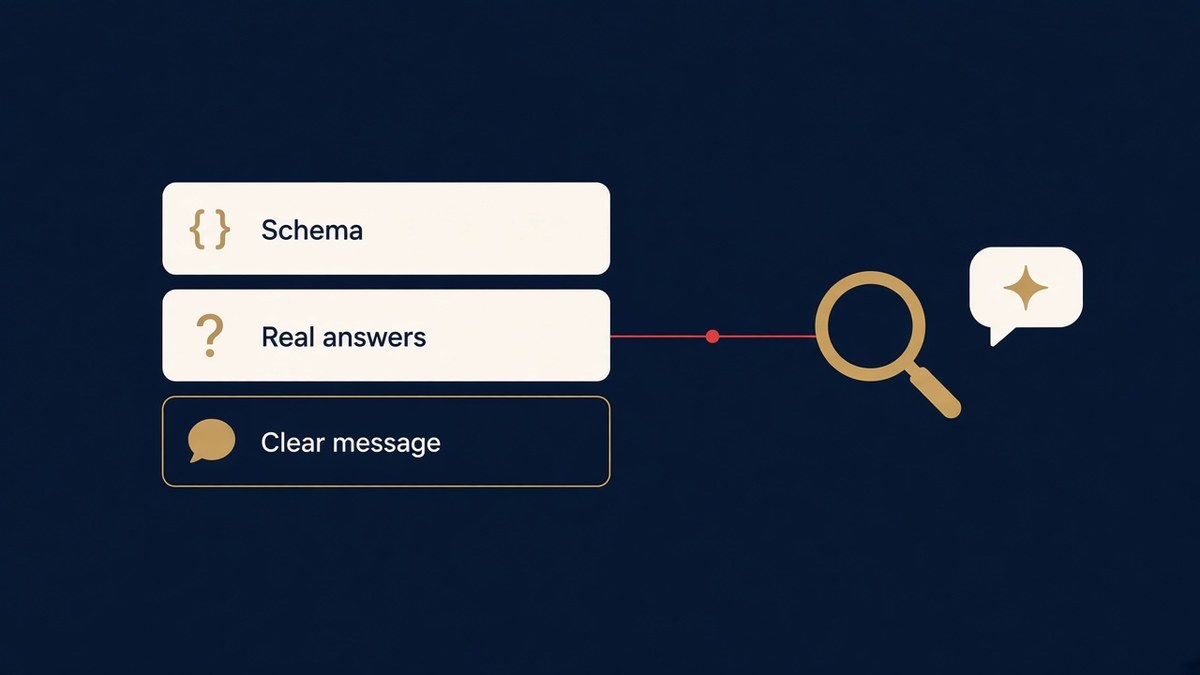
I have written elsewhere about AI readiness signals and technical pieces like schema and LLMs.txt. The point for this myth is simpler: depth and proof do not have to live in the hero paragraph. They belong in the pages and posts buyers and AI both read when they dig in.
For a deeper walkthrough of AI visibility, see Why your business does not show up in AI search and the 8 Signals overview on storyworks.marketing.
What this looked like on a real site
Here is one example from work with another StoryBrand Certified Guide. She works as a fractional CMO for smaller independent nonprofits. I am keeping her anonymous here. This is one client's experience, not a guarantee and not a "typical" result.
Her website was already pretty good. StoryBrand clarity was mostly in place. It had drifted in a couple of spots.
On the homepage she had a section that said, in effect, and we do websites too. That pulled the wrong attention for a one-on-one coach who helps smaller nonprofit leaders who are often doing everything themselves. We moved that website offer to a service page and left a simple "Need a website too?" link instead of featuring it in the hero story.
Keywords were another drift. Broad fundraising searches often surface large firms that run capital campaigns for big churches and big budgets. That was closer to who she was showing up for than the smaller independent nonprofits she actually serves. We had to find the keywords her ideal client would search, then refine the site so it spoke to that person.
After the keyword work, I ran a free AI score for her. The scoring language I use places a site somewhere along searchable, findable, citable, or authoritative. Then we went through an AI Search Readiness style process: build a client archive of what she does that may not be on the site yet, measure gaps, fill gaps with copy and FAQs, do a one-hour interview on the weak spots, and turn that into a 30 / 60 / 90-day report.
She told me she only did the first two items on the 30-day list from her AI Search Readiness report.
First was a homepage FAQ block: three plain Q&As on the homepage, plus FAQPage schema, aimed at the keyword "fractional CMO for nonprofits." The questions covered what a fractional CMO for a nonprofit is, what an engagement looks like and how long it runs, and what to do if the organization cannot afford it. In the report I wrote for her, the point was that AI leans heavily on the homepage, so putting plain answers there is the single fastest way to get quoted -- and the same words reassure a human before they ever book a call. That piece strengthens Question and Answer Content first, and also Content Extractability and Entity Clarity.
Second was a pillar page for her named signature method: a cornerstone hub page with Service schema, roughly 1,200 to 1,800 words, built as the definitive page for her framework so other posts could link back to it. The report guidance was that a named framework AI can attribute to you is the difference between "a nonprofit consultant" and the consultant known for that method. That piece strengthens Proprietary Assets and Method first, and also Topical Depth, Content Extractability, and Entity Clarity.
Within about four days she messaged to say she had picked up an ideal client, and they found her on ChatGPT.
Again: one guide, one site, one outcome after two focused fixes. Useful as a picture of how clear messaging plus the right keywords plus page-level proof can work together. Not a promise that ChatGPT will send you a client in four days. I am not treating projected readiness scores as results here -- only what she did and what she reported back.
What I tell other Guides is that a lot of this work is positioning. You already know how to clarify a message. The gap is helping that message show up for the right searches and the right AI answers without stuffing the homepage.
What to do on your own site
- Protect the homepage. Can a stranger say what you do and how you help within a few seconds? If not, cut cognitive load before you add more SEO copy.
- Move depth off the hero. About, services, and long blog posts are where 2,500-plus words belong.
- Use a clean keyword pattern. Small keyword line. Human hero as H2. H3 for the better life. Natural copy. No crammed location phrases.
- Answer real questions. Five to eight page-specific FAQs beat vague filler.
- Prove it. E-E-A-T is "you say you do this, but prove it."
- Check who your keywords attract. Ranking for the wrong searcher is still a miss.
- Treat AI readiness as an extension of clarity. Schema, complete answers, and a client archive of what you actually do help machines describe you accurately.
If you want help walking through that on your site, that is what a discovery call is for.
Book a discovery call -- we will look at whether StoryBrand clarity and search are working together on your site, or fighting each other: Book a discovery call
FAQs
Does StoryBrand hurt SEO?
Not if you treat the homepage as the clarity layer and put depth on about pages, service pages, and long blog posts. The myth assumes fewer words always lose. Focused words plus the right structure are the workaround.
Why do StoryBrand homepages look so short?
Cognitive load. If a buyer has to work to understand you, they leave. Guides aim for more powerful words and fewer of them on the first screen so people get who you help within seconds.
Where should the long SEO copy go?
About pages, service pages, and blog posts people expect to be long. Pair those posts with They Ask, You Answer questions and proof, not keyword stuffing.
How do you put a keyword on a StoryBrand hero without sounding salesy?
State the target keyword in small text, use the big hero line as an H2 for the human message, add an H3 for how life gets better, and avoid cramming location keywords into natural sentences.
How many FAQs should a page have?
In practice I often use five to eight pinpoint questions tied to that page and its keyword.
Does this still matter for AI search?
Yes. Clear messaging still comes first. AI search leans on complete answers, proof, and structure. Incomplete pages leave gaps machines may fill in ways that do not help you.
What is a practical first step if my StoryBrand site is clear but quiet?
Check whether your keywords match the buyers you want, then look at page FAQs, schema, and whether depth lives somewhere other than the hero. A discovery call is a low-pressure way to walk that checklist on your URL.
About the Author
Tim Yates is the founder of StoryWorks Marketing in the Des Moines area (Waukee, Iowa). He is a Certified StoryBrand Guide (since 2020), a StoryBrand Certified Coach, and a Duct Tape Marketing Certified Fractional CMO. He helps owner-led service businesses clarify their message and get found through StoryBrand SEO, local SEO, and AI search readiness.
Verification: StoryBrand directory · Duct Tape Marketing consultant profile
Related reading: StoryBrand SEO · What is StoryBrand · StoryBrand Certified Agency vs Guide · AI Search Readiness · Local SEO Services · SEO Services for Small Business · Why Thin Coverage Keeps You Out of AI Answers